

What is floc and why does it form in liqueurs?

A clear liqueur can look flawless as it comes off the bottling line, only for whitish strands to appear floating in the bottle weeks later. This is floc. Here’s what it is, why it forms and how to prevent it during production.
What is floc?
Floc is a whitish, cotton-like deposit that forms in liqueurs days or weeks after bottling. It occurs when microscopic residues in the sugar clump together over time. It poses no health risk, but it spoils the appearance of the liqueur.
- What it looks like: whitish strands floating in the liqueur or settling at the bottom of the bottle.
- When it appears: floc forms during storage, after bottling. That’s why it often goes unnoticed until the product is already on the shelf.
- What it means for manufacturers: customers may think the liqueur has spoiled or gone past its expiry date. For a clear liqueur, this can mean withdrawing the batch.

Why does floc form in liqueurs?
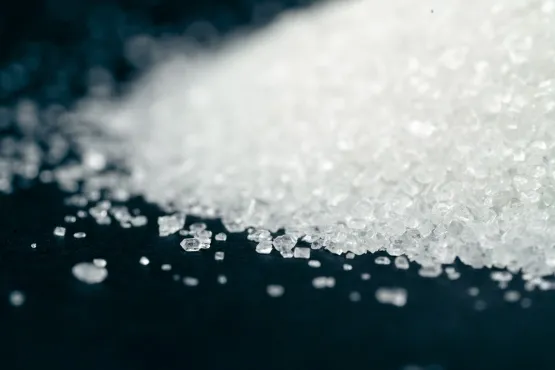
Floc consists of microscopic plant residues left in the sugar. Over time, the alcohol or acidity of the liqueur causes these residues to clump together into visible strands.
Cane sugar
Alcohol triggers floc formation. It causes the proteins in the cane to bind to its natural pigments. Over the next few days, the clumps grow large enough to see in the bottle.
Beet sugar
Acidity triggers floc formation. It causes plant compounds called saponins to bind to the plant’s proteins. That’s why floc forms mainly in acidic liqueurs, such as fruit liqueurs.
At BS Edulcorantes, we supply beet sugar for liqueur production.
How can you tell floc from other types of haze?
The difference lies in whether the cloudiness goes away. Many drinks naturally become cloudy when you add water or chill them, then return to their original appearance. Floc, on the other hand, stays in the bottle.
| Type of haze | What causes it | Is it a defect? | Where it typically occurs |
|---|---|---|---|
| Louche effect | Adding water or ice. The drink’s essential oils, such as anethole from aniseed, are insoluble in water and turn the drink white. | No. It’s a natural and expected reaction. | Aniseed liqueur, absinthe and some gins |
| Chill haze | Chilling the drink. Some of its compounds come out of solution at low temperatures. | No. It clears once the drink returns to room temperature. | Whisky, rum and gin that haven’t been chill-filtered |
| Floc | Microscopic residues from the sugar clump together over time in the bottle. | Yes. It persists and spoils the appearance of the liqueur. | Clear, sweet liqueurs, including sweet aniseed liqueur |
Unlike these types of haze, floc doesn’t clear, so the only solution is to prevent it.
How do manufacturers prevent floc?
Preventing floc starts with the sugar you use: choose a high-purity sugar, require your supplier to guarantee that it won’t cause floc and verify that guarantee by carrying out stability tests before production.
Here are the steps to take:
- Choose the right source of sugar. Beet sugar prevents the kind of floc that typically forms with cane sugar, but it can cause floc in acidic liqueurs.
- Set purity requirements. Specify a low ICUMSA colour value and ask for the floc test result for each batch.
- Run stability tests. Let a sample of your recipe stand for at least 10 days, then hold it up to the light to check it.
- Stick with the same supplier. This keeps a change in sugar from spoiling a recipe that already works.


Looking for sugar for liqueur production?
At BS Edulcorantes, we supply beet sugar to liqueur and spirits manufacturers, with the purity and batch-to-batch consistency needed for a clear liqueur.
We’ll supply it in the format and quantity your production needs. Get in touch and we’ll put together a proposal for you:
- Call us on: +34 948 816 753
- Email us at: info@bsedulcorantes.com